

Rabbi Gabriel Kanter-Webber
Brighton and Hove Progressive Synagogue, Wednesday 1 October 2025
🔈 You can listen to the audio recording here:
Perhaps God put something in my mouth,
A precious stone that turned into a hot coal.
It makes my song, when it reaches the human nose, smell
Both rotten and fragrant.
- A poem1 by the 11th-century Spanish poet Solomon ibn-Gabirol. And it really speaks to me. A sense of having a Divinely-placed jewel in one’s mouth, only for it to transpire that the jewel is a burning-hot coal – with all the difficulties and troubles that come with having a burning-hot coal in one’s mouth.
- It won’t come as great shock when I reveal that I’m something of an outspoken individual (stop sniggering at the back). That’s been the case for as long as I can remember. And of course I’m well aware that this outspokenness does not win me universal approval. Fact is, that has never even remotely bothered or deterred me.
- I recently discovered something about myself which perhaps explains this.
- Back in June, I was diagnosed as autistic. (That’s paracetamol for you…)2
- Being officially autistic came as no surprise whatsoever. Frankly, I could probably have bypassed the entire lengthy and costly assessment process simply by telling the psychologist about the time when, aged 10, I forced my mum to accompany me to Stevenage for the annual general meeting of the Flag Institute. Case closed.
- But beyond that, I have encyclopaedic knowledge of all sorts of vitally important topics such as the Freedom of Information Act, the history of Pitcairn Island in the South Pacific, and shorthand. I’ve always pushed back against power, and have a strong tendency to rely on formal legal processes and protocols in order to do so:3 when I get a parking ticket, you bet I’ll go back to the scene with a tape measure and check the yellow lines against the official records. I’m an inveterate fiddler and really struggle to focus unless my hands are occupied. I find the experience of being surrounded by noise and demands overwhelming, so childcare is a real challenge.
- More relevantly, though, perhaps over the three years that I’ve been here, I’ve done or said, or omitted to do or say, some things to some of you in a way that has been unintentionally offensive, because I overlooked some social cue or misunderstood some norm. In that case, Kol Nidre is a good moment to apologise.
- Now, technically, as of the moment I read paragraph [4] of this sermon out loud, I became the UK’s first ever openly autistic rabbi.4
- That, though, is ludicrous and must surely be misleading. It is inconceivable that I’m genuinely the first. As Rabbi Ruti Regan, technically the first openly autistic rabbi in the United States, has observed:5 “What do you do in a [rabbinic seminary]? You sit in the same place, learn with the same people, study the same texts, ask the same questions for hours on end, as you rock back and forth and talk to each other in a sing-songy voice.”
- In fact, a strong case could be made that Solomon ibn-Gabirol himself – the medieval poet whose words are introducing each of my High Holy Day sermons this year – had autistic traits. He wrote extensively about his struggles with sleep and his lack of close friendships. Many of his poems show an awareness that he was incapable of “behaving like a normal person”.6
- One of ibn-Gabirol’s near-contemporaries gave us a detailed character analysis:7 “His satire can exceed the bounds of propriety […He could not] rein in the demon that was within himself. It came easily upon him to lampoon the great with salvo upon salvo of mockery and sarcasm.” I laughed out loud when I came across that line because it sounded so similar to things I heard at almost every secondary school parents’ evening.8 Yet I suspect ibn-Gabirol himself didn’t much mind that that was the way in which he came across. He may even have relished the infamy that came with doing what he understood to be the right thing,9 taking the mighty down a peg or two.
- That attitude might be called courage, but it’s perhaps more accurately called fearlessness (or, as my parents would probably say in my case, recklessness): a genuine lack of concern for social climbing,10 for appearing ‘normal’,11 for what happens when one simply turns one’s back on pressure12 and instead pursues their own understanding of justice.
- When I see injustice or iniquity or un-Jewish behaviour, I cannot stop myself from opening my mouth, whether the setting is online, in the Jewish press or here on this bimah. And what comes out is not a precious stone. No. Without doubt, it’s a hot coal. A searing pyroclastic flow, not a dainty carving of beautiful jade, even when the latter is what some might be hoping for. I don’t get intimidated when people try to intimidate me – and I make a point of showing that I’m not intimidated, because I don’t want them to think that they succeeded and begin worshipping their imaginary power.
- Joanne Limburg, an autistic writer (and, far more importantly, a Reform Jew from Edgware), has written the following of her own experience:13 “As autistic people, we feel the pull of the truth as we see it more naturally and more powerfully than we feel the pull of fitting in. It is not that we choose to be this way … there is such a thing as a capacity for conformity and ours is relatively weak.” I deeply identify with that. In fact, when I read it, I almost cried with the thrill of finally reading a description of someone having a lived experience that matched my own.
- I could perhaps have entitled this sermon ‘Things that drive our poor Chair to distraction as she tries to line-manage me’.
- I know that my public voice and my inability to pipe down and ‘just let it go’ make me a difficult employee, just as they made me a difficult rabbinic student and, indeed, a difficult schoolboy.
- For better or for worse, my brain didn’t come pre-installed with the neurotypical instinct and ability to sugarcoat my output14 to make it palatable to those who are affronted by the unfiltered honesty15 of my belief in universal human dignity. And if I try to ‘hold myself back’ for an extended period, then, as with all forms of autistic masking, I suffer the consequences (which include stress, anxiety and, especially, exhaustion).
- And on the whole, I’m pleased that God put that hot coal in my mouth. Without it, I wouldn’t be me.
- Because as well as causing our fantastic trustees, and Rabbi Charley at Mission Control, a few headaches, I like to think that my distinctive way of being brings something to the table.
- My general nerdiness is what fuels our eclectic Thursday evening adult education programme, where, together, we’ve dived into topics from marriage to mermaids, from Pharaoh to Philip Pullman.
- My willingness to deploy what ibn-Gabirol rather charmingly called חִצֵּי אֲמָרַי, “…word-darts”,16 in speaking out without being deterred by naysayers, continues Rabbi Elli’s work of making our congregation a safe place for those with views that make them unwelcome in other parts of the Jewish community.
- And, when I went to print my Yom Kippur sermons on Monday morning, I found the printer loth to comply, so of course I sat and patiently reprogrammed it via its IP address. I bet Ephraim Mirvis doesn’t do that!
- Even my typical appearance on a Saturday morning, which I’m occasionally told doesn’t make me ‘look like a rabbi’, whatever that means, hopefully creates a welcoming informality: at least one person who chose to join us recently after many years’ absence from organised Jewish spaces said that it was my jeans which made their final decision for them.
- And those jeans-with-a-J, in turn, I think derive from my genes-with-a-G, the way I am, hardcoded into the essence of my being.
- I’ve talked rather a lot about myself tonight. I’ve probably transgressed the most important rule of Jewish preaching, namely, ‘Don’t use the bimah as therapy.’
- But there is a reason. I very much doubt that I’m actually the first autistic rabbi in the UK, but I’m the first openly autistic one, and the openness is important. If there is any time of year when we should be looking within ourselves and introspecting – but also opening ourselves up and becoming vulnerable – it is now, Yom Kippur.
- Self-knowledge is always a good thing. Earlier in the service, we read from another ibn-Gabirol poem, printed in the machzor:17 “The intimations of Your presence when I look within myself … make me conscious of You at all times.”
- Of course, what we discover with that self-knowledge is a different matter.
- Continuing to address the topic of autistic outspokenness, Joanne Limburg goes on to say:18 “You could see this as a disability, a dangerous deficit … You could also see it as an advantage that [gives] you the ability to face the forces of [evil] down and force them to concede defeat.” She recognises that this autistic trait, like many others, can be a double-edged sword, arguably a problem, arguably an advantage. Arguably rotten, arguably fragrant.
- That approach is characteristic of the neurodiversity movement, which aims to depathologise conditions such as autism and ADHD, and to see them less as ‘conditions’ and more as ways of being. They are not phenomena to be ‘cured’ or prevented.
- Neurodivergent people – and I know we have many, many here at BHPS – are wired slightly differently to others, and might have different modes of thinking, different modes of behaving and different modes of expression, but that’s about it. Whether our ways of being are a deficit or an advantage – rotten or fragrant – depends on wider society’s approach.
- Indisputable, though, is that society as a whole relies on the entire, infinite rainbow of neurodiversity.
- God made us all the way that we are. Whether we were born with a precious stone on our tongue, or a burning-hot coal, or anything in between, neurodivergent or neurotypical, we were created the way that we are with some Divinely-selected mission in mind.
- Of course, talking about ‘the way that we are’ as if it’s some sort of eternally fixed fact of nature, is not, of course, an ‘excuse’ for anything. I’m painfully aware of just how recently Gregg Wallace tried to utilise his autism to make out that he was the victim when being dismissed for decades of sexual harassment.19 That was a disgraceful moment from a disgraceful, and very annoying, man.
- No. This isn’t about excuses but about reflection. Yom Kippur is a quite literally heaven-sent opportunity to reflect on our personalities, on our ways of being, and to contemplate how best we can use these for the benefit of others and the service of our community and our world.
- We all have something rotten within us. We all have something fragrant. Very often, the something that is rotten and the something that is fragrant may be exactly the same thing, a trait or characteristic whose meaning and potential only become clear in the light of our relationships with others, with humanity as a whole. It’s a two-way process. We must do what we can to make our characteristics fragrant rather than rotten. We have a right to rely on those with whom we interact to help us to do the same.
- Because society needs people with hot coals in their mouths. It also needs people with tongues of precious jewels. Society needs people who dress smartly and it needs people who dress shlochily. It needs the oddballs and it needs the straightlaced. We rely on those with highly-attuned social antennae to staff our diplomatic service and be the DJs at our weddings. We also and equally rely on those with distinctly different mindsets to be our innovators and to speak truth to power without fear or favour. God created the world with infinite variety, and did so quite deliberately. The natural world relies on biodiversity. The human world relies on human diversity.
- So, my own personal reflections this Yom Kippur will come with a new focus and a renewed understanding. In the words of the autistic American rabbi Shoshana Meira Friedman (see, there are a lot of us!): “Autistic is a beautiful way to be, and the only one I will ever know.”20 No matter what challenges I face – and the challenges I faced in the past without the awareness I now have – that line rings true.
- No neurological way of being is, by itself and taken in isolation, right and proper (or wrong or problematic). Any aspect of our personalities can be rotten or it can be fragrant. We must make what we can of ourselves and support and lift up others to do the same. All of us have a duty to cherish the miraculous variation within our kind, and to revel in the gifts that such diversity brings to our own lives, to the life of our community, and to the life of humanity.
- Thank you for indulging me tonight; I guarantee you’ll be hearing less about my brain tomorrow; and let me wish you well over the fast: גמר חתימה טובה.
Afterword
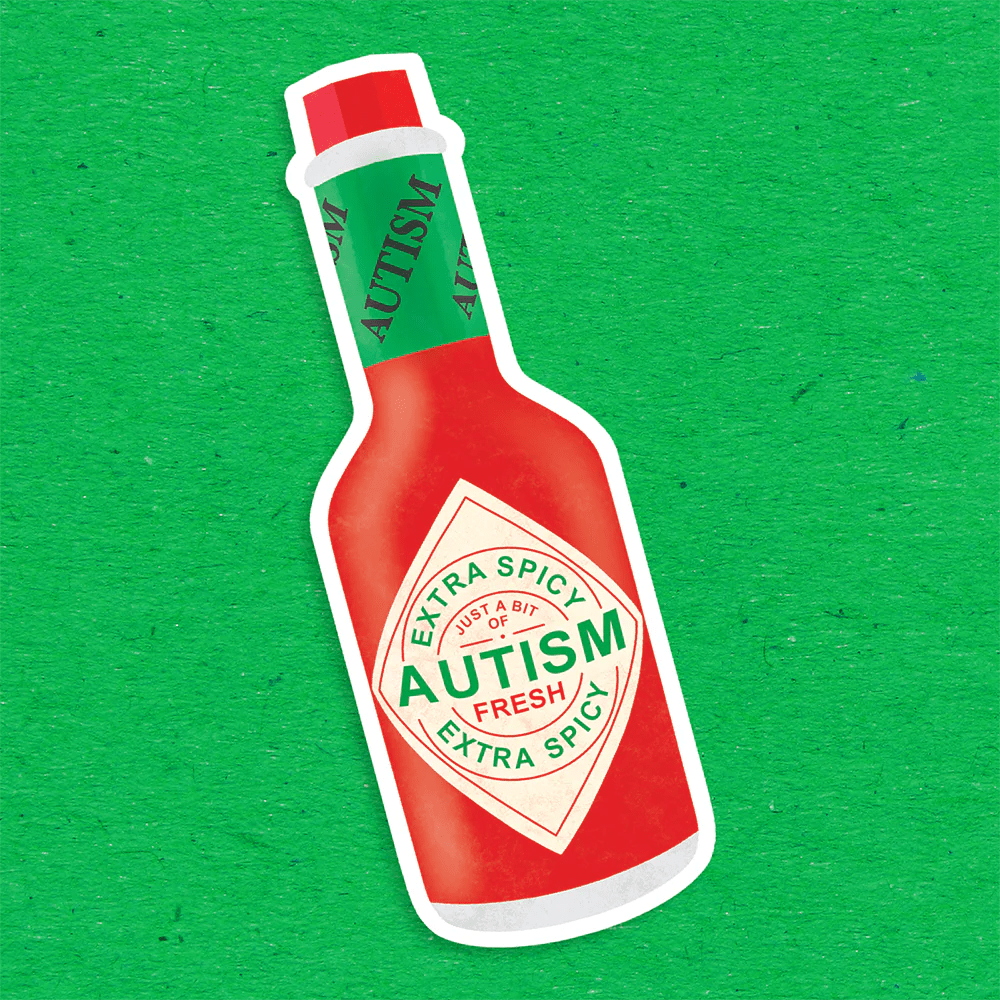
This is a very personal reflection, and I’m aware that I may – somewhat characteristically – be blurting out a series of feelings soon after being diagnosed as autistic without proper forethought. I am a new member of the neurodivergent community, and conscious that I may – again, somewhat characteristically – have transgressed a norm, used the wrong terminology, or been unintentionally offensive. Please take my contrition as a given.
Later today I’ll be uploading the audio of the sermon I formulated yesterday morning in response to the terrorist atrocity in Manchester, along with my BBC Radio Sussex interview early this morning.
Comments are welcome at the bottom of the page. Please note that they are premoderated and anything abusive simply won’t be published.
Remember that all of my sermons, handouts and so on can be found here.
Subscribe to get the latest posts sent to you by email:
Notes
- Repr in Raphael Loewe, Ibn-Gabirol (Weidenfeld: Peter Halban, 1989): 64. Ibn-Gabirol names two specific scents: חלבנה and שחלת, ingredients of Temple incense, which the Talmud (b.Keritot 6b) identifies as smelling foul separately but pleasant in combination. ↩︎
- “EU, WHO counter Trump’s warnings on autism and pregnancy”, Reuters (23 September 2025). ↩︎
- Cf Wright v Cardinal Newman Catholic School, (London South Employment Tribunal case 2300640/2019, 6 December 2021, unreported) at [141]-[143]. ↩︎
- This is based on a combination of personal knowledge, conversations with colleagues and research online and in news archives. I am not counting Moshe Freedman, who obtained an autism diagnosis after being sacked as rabbi of the New West End Synagogue for serious sexual misconduct and used it to argue, unsuccessfully, that his sacking constituted disability discrimination: see Freedman v United Synagogue (Central London Employment Tribunal case 2210360/2023, 2 May 2025, unreported). ↩︎
- Gabrielle Birkner, “Jews with disabilities were at Sinai too”, Times of Israel (8 November 2015). ↩︎
- Raymond P Scheindlin, Vulture in a Cage: poems by Solomon ibn-Gabirol (Brooklyn: Archipelago Books, 2016): xvi. ↩︎
- In the rather splendid, albeit loose, translation of Loewe, ibid: 19-20. ↩︎
- Not to mention the Leo Baeck College teacher who described me as “nauseating”… ↩︎
- See eg Rabbi John D Rayner’s lecture 52, “Solomon ibn-Gabirol” (25 November 1955): 7-8. ↩︎
- See eg Catherine Caldwell-Harris and Anna Schwartz, “Why autistic sociality is different: reduced interest in competing for social status”, Ought 5 (2023), 78-95. ↩︎
- See eg Chris Bonnello, “We need to stop saying ‘we’re all a little autistic’”, Autistic Not Weird (2 October 2017), observing that if the world was run by autistic people, it “would be driven more by ‘right and wrong’ than ‘appropriate and inappropriate’”. ↩︎
- See eg David Lewis and Helen Evans, “Autistic employees as whistleblowers: are employers ignoring potentially valuable assets?”, Middlesex University (2021), unpublished. ↩︎
- Joanne Limburg, Letters to My Weird Sisters: on autism and feminism (London: Atlantic Books, 2021), ebook edition, “Letter to Katharina Kepler”. ↩︎
- See eg Coralie Chevallier, Catherine Molesworth and Francesca Happé, “Diminished social motivation negatively affects reputation management: autism spectrum disorders as a case in point”, PLoS ONE 7 (2012), e31107. ↩︎
- See eg David Shope, “Autism, allocentrism and the moral significance of manners”, PhD dissertation (University of California Riverside, 2021): 38-45. ↩︎
- Yarden’s Shirei ha-Chol l’Rabbi Shlomo ibn-Gabirol: 118. ↩︎
- Machzor Ruach Chadashah p 178. ↩︎
- Limburg, ibid. ↩︎
- Noor Nanji and Felicity Baker, “Gregg Wallace faces backlash over autism defence”, BBC News (10 July 2025). Perhaps Wallace would get on well with Moshe Freedman. ↩︎
- Rabbi Shoshana Meira Friedman, “Creativity at the centre: cultivating my autistic joy“, Jewish Boston (15 February 2023). ↩︎
 Rabbi Gabriel Kanter-Webber
Whether it’s a function of your autistic way of being or not I have to say that my own brain delights in the fact that this is a footnoted sermon! So much for me to sit and dig into further ! Thank you
A very interesting, thoughtful and enlightening sermon. Thank-you.